Application
Label Inspection
Label inspection looks simple until you count the SKUs. The engineering is in tolerance definition, artwork management and changeover discipline.
Direct answer
What does a label inspection system check?
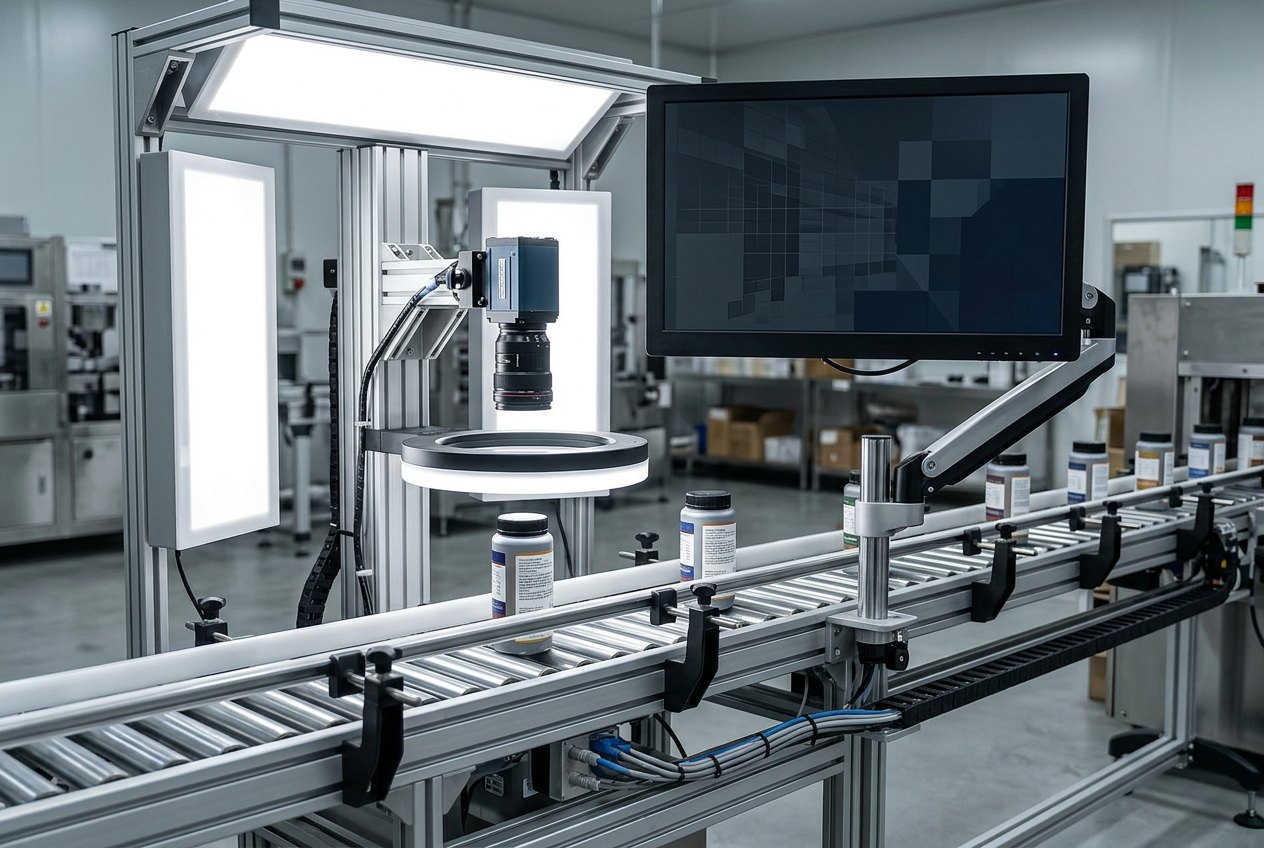
A label inspection station typically verifies that a label is present, is the correct artwork for the work order, is positioned within placement and skew tolerance, is free of wrinkles, tears and bubbles, and that variable data — lot, date, weight, barcode — is legible and matches the expected value. Failures are signalled to the PLC for reject and logged for traceability.
Four distinct checks people bundle together
Each check has a different failure cost and a different tolerance owner. Writing them separately prevents the common trap of one pass/fail threshold that is simultaneously too loose for regulatory data and too tight for cosmetic placement.
- Presence — is there a label at all? Cheapest check, still the most common escape.
- Identity — is it the right artwork for this order? Requires a managed reference library, not operator memory.
- Placement — position, rotation and skew against a datum, with tolerances that match the actual applicator capability.
- Content — variable data read and verified (OCV), plus code read and grade where a retail or regulatory spec applies.
Practical imaging notes
- Clear-on-clear labels need geometry, not gain: dark-field or low-angle light reveals edges that front light hides.
- Round bottles change apparent geometry across the label; either constrain rotation, use multiple cameras, or restrict the region of interest to a stable band.
- Wrinkle and bubble detection is a shading problem — grazing illumination is usually more informative than higher resolution.
- Glossy varnish and shrink sleeves behave like packaging film; treat them with the same specular-control toolkit.
Changeover is the real requirement
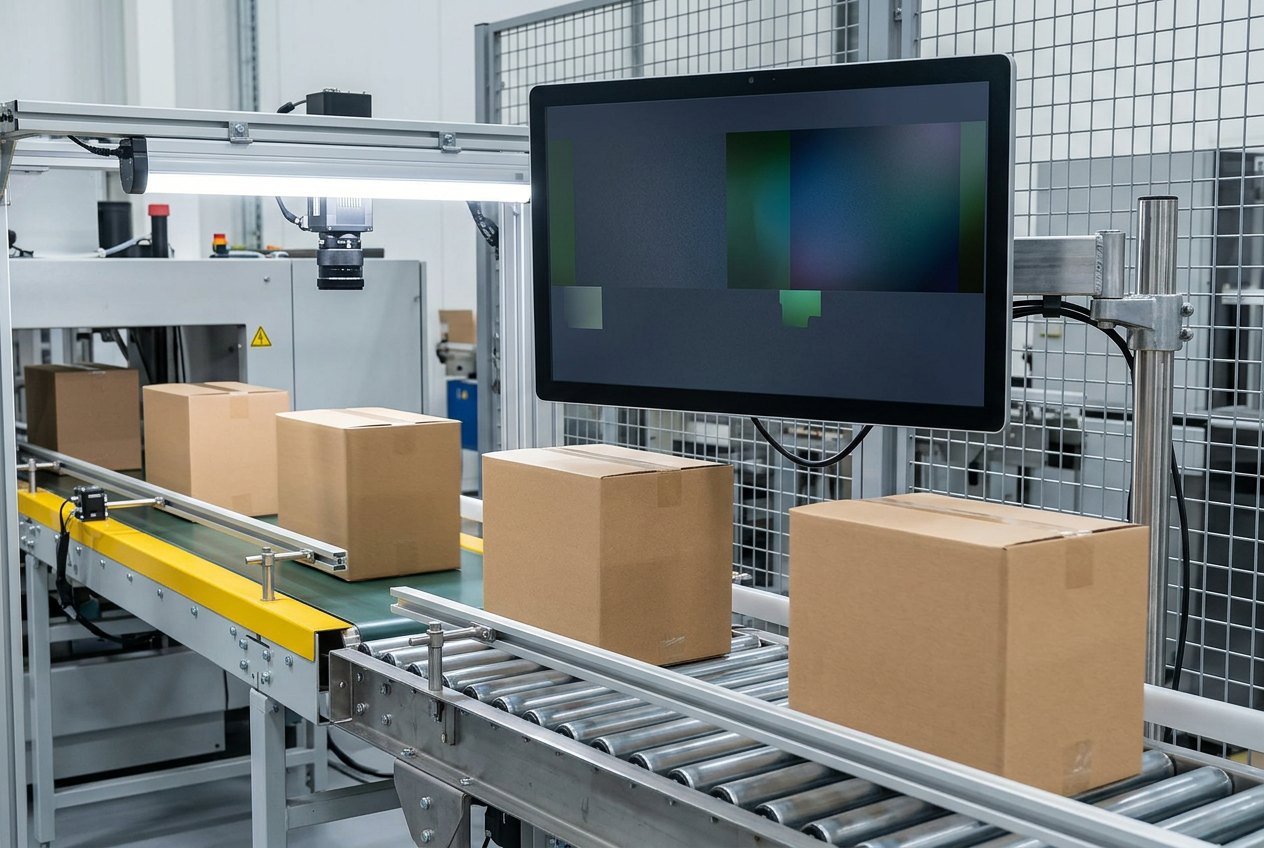
A label station that requires an engineer for every SKU change will be bypassed within a month. Recipe management, an artwork reference library with revision control, and a guided operator changeover are part of the deliverable.
Frequently asked questions
- Can one camera inspect labels on all sides of a bottle?
- Not reliably. Full wrap coverage generally needs multiple synchronized cameras, a rotating fixture, or a line-scan approach with the bottle rotated under the sensor.
- Is barcode verification the same as barcode reading?
- No. Reading returns the decoded value. Verification grades print quality against a standard such as ISO/IEC 15416 or 15415 and requires controlled illumination and geometry to be meaningful.
Related engineering material