Application
Print & Web Inspection
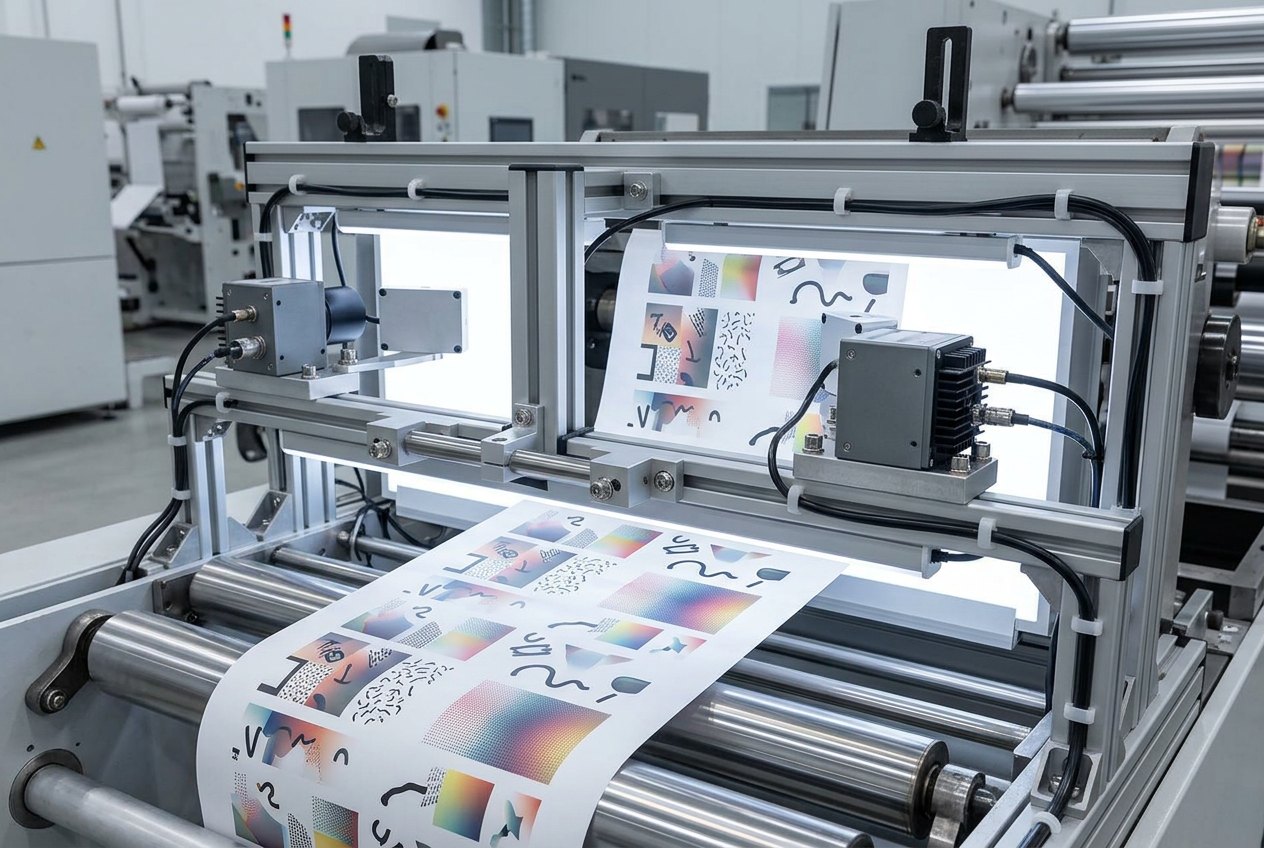
Continuous material is a line-scan problem. Once the web never stops, resolution, encoder synchronization and light uniformity govern everything else.
Direct answer
What is print / web inspection?
Print or web inspection is 100% automated visual inspection of continuously moving printed material. A line-scan camera synchronized to an encoder builds a continuous image of the web, which is compared against a golden reference or evaluated for defect classes such as streaks, voids, hickeys, doctor-blade lines, registration error and color drift. Defects are logged with position so the roll can be mapped and dispositioned.
Why line scan, not area scan
Area-scan cameras sample discrete frames; on continuous material this either leaves gaps or forces heavy overlap and awkward stitching. A line-scan camera clocked by the web encoder produces a seamless image whose down-web resolution is set by encoder pulses rather than frame timing, which is why it dominates in printing, converting, coating and film.
- Cross-web resolution comes from web width divided by sensor pixel count.
- Down-web resolution comes from the encoder pulse-per-line ratio; mismatched ratios produce stretched or compressed images that break defect metrics.
- Illumination must be uniform along the entire scan line — high-frequency line light, correctly aligned and periodically verified.
- Data rates grow quickly; interface headroom and storage policy are part of the design, not an afterthought.
Defect classes worth separating
- Repeating defects (plate, cylinder or blanket related) — periodic in the down-web direction, so period detection identifies root cause.
- Random defects — splashes, contamination, foreign fiber, pinholes.
- Streaks and doctor lines — long, low-contrast, best found with directional filtering.
- Registration and misprint — color-to-color offset, missing element, ghosting.
- Color drift — measurable trend rather than a discrete event; usually reported to press control, not to a reject.
Reference architecture
Web inspection — encoder-clocked line scan
What a print inspection has to deliver operationally
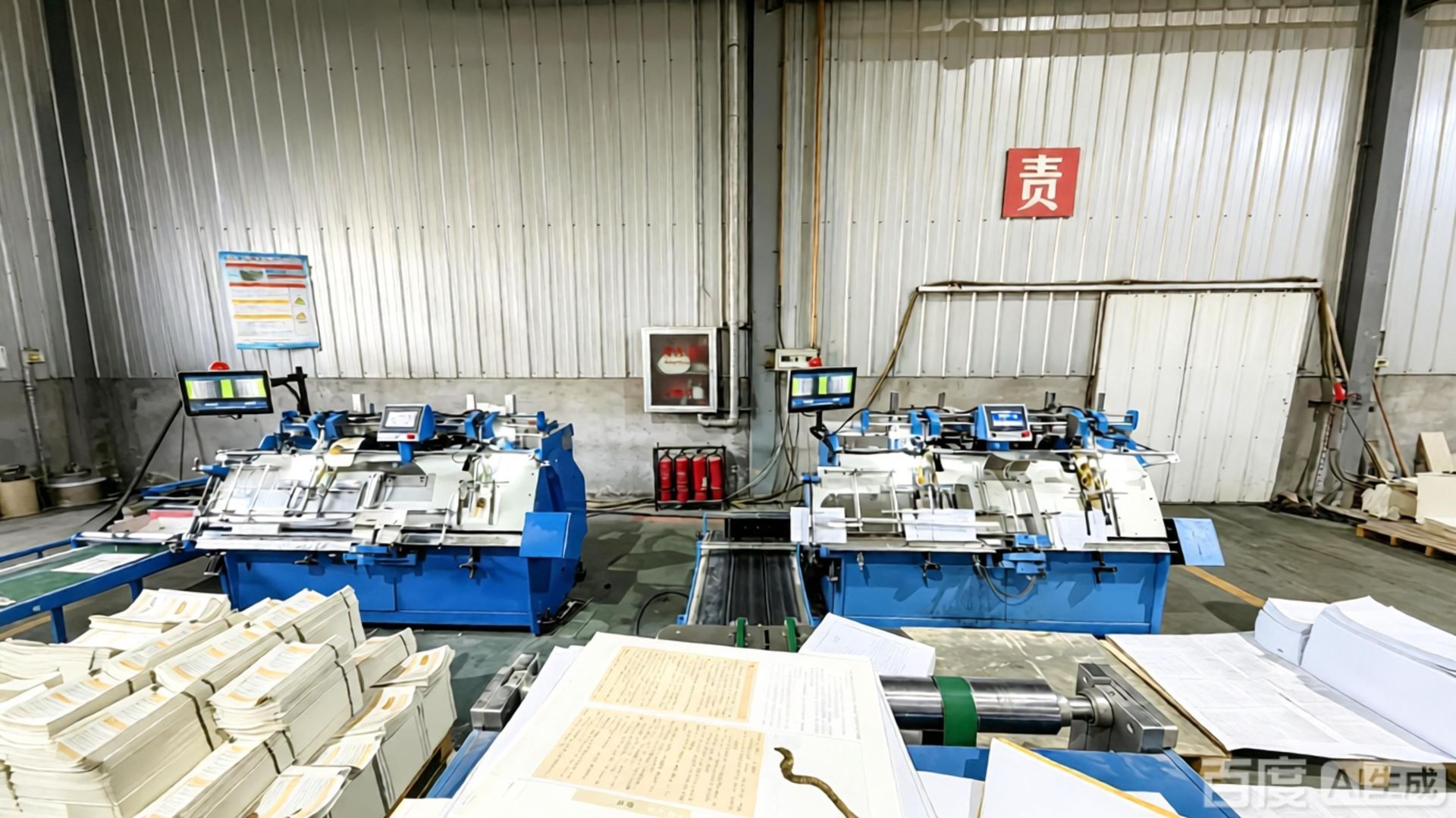
The engineering value is not only detection: it is dispositioning. Operators need a roll map, defect thumbnails, severity grading and a decision rule for scrap versus release. Without that, an inspection system becomes an alarm nobody trusts.
Frequently asked questions
- How fast can line-scan inspection run?
- The limit is line rate times resolution times available light. Practically, you solve for the required cross-web resolution first, then check whether the camera's maximum line rate supports the web speed with an exposure short enough to avoid down-web smear, then confirm you can deliver enough light at that exposure.
- Do I need a frame grabber?
- For high-rate line scan with CoaXPress or Camera Link, yes. Many GigE Vision and USB3 Vision line-scan cameras run without a grabber, at lower sustained data rates. The decision follows the bandwidth budget, not preference.
Related engineering material