Advanced engineering
Advanced Embedded & Edge Vision Engineering
VisionAxiom's core business is inline inspection of printed codes, labels, print/web and packaging. Beyond fixed production-line inspection, we also develop embedded and edge-vision modules for specialized applications — engineering capability that informs how we architect inspection systems.
Direct answer
What is edge inference in an industrial vision system?
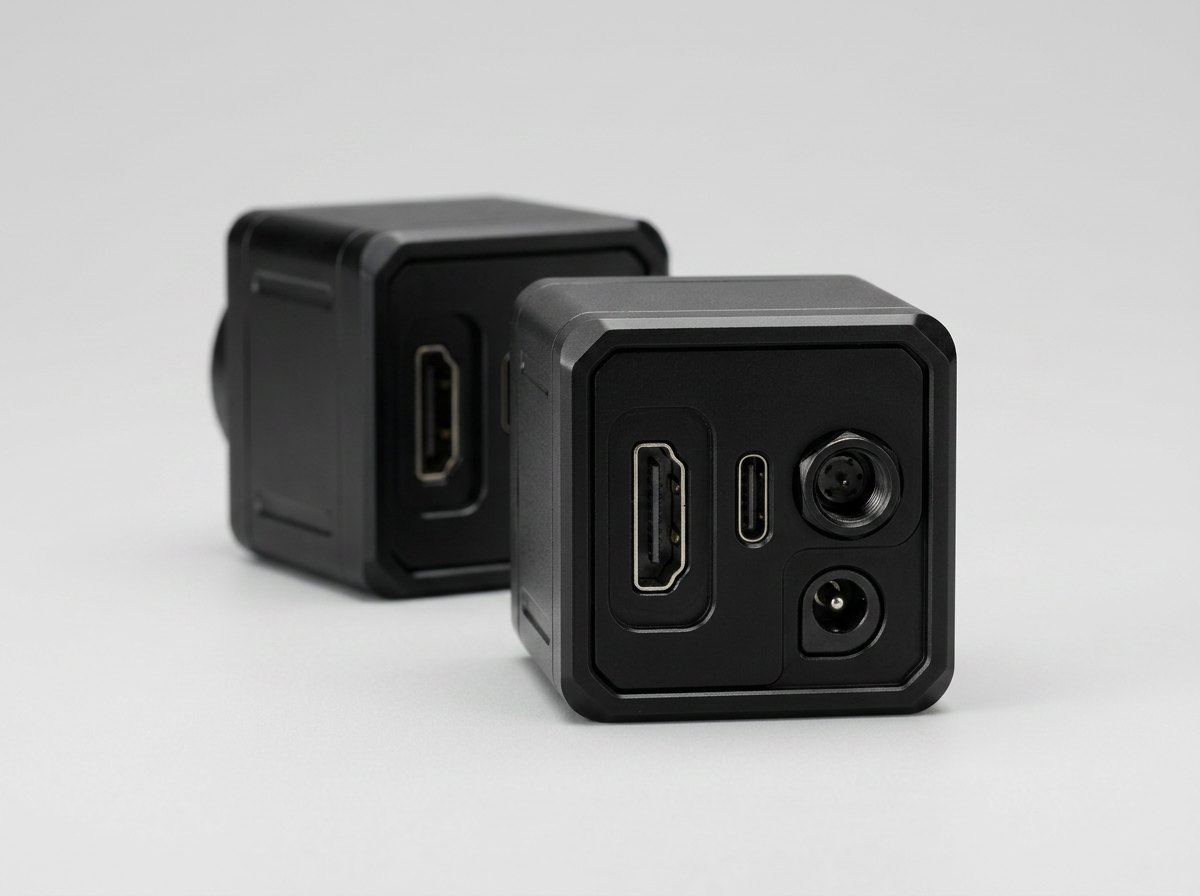
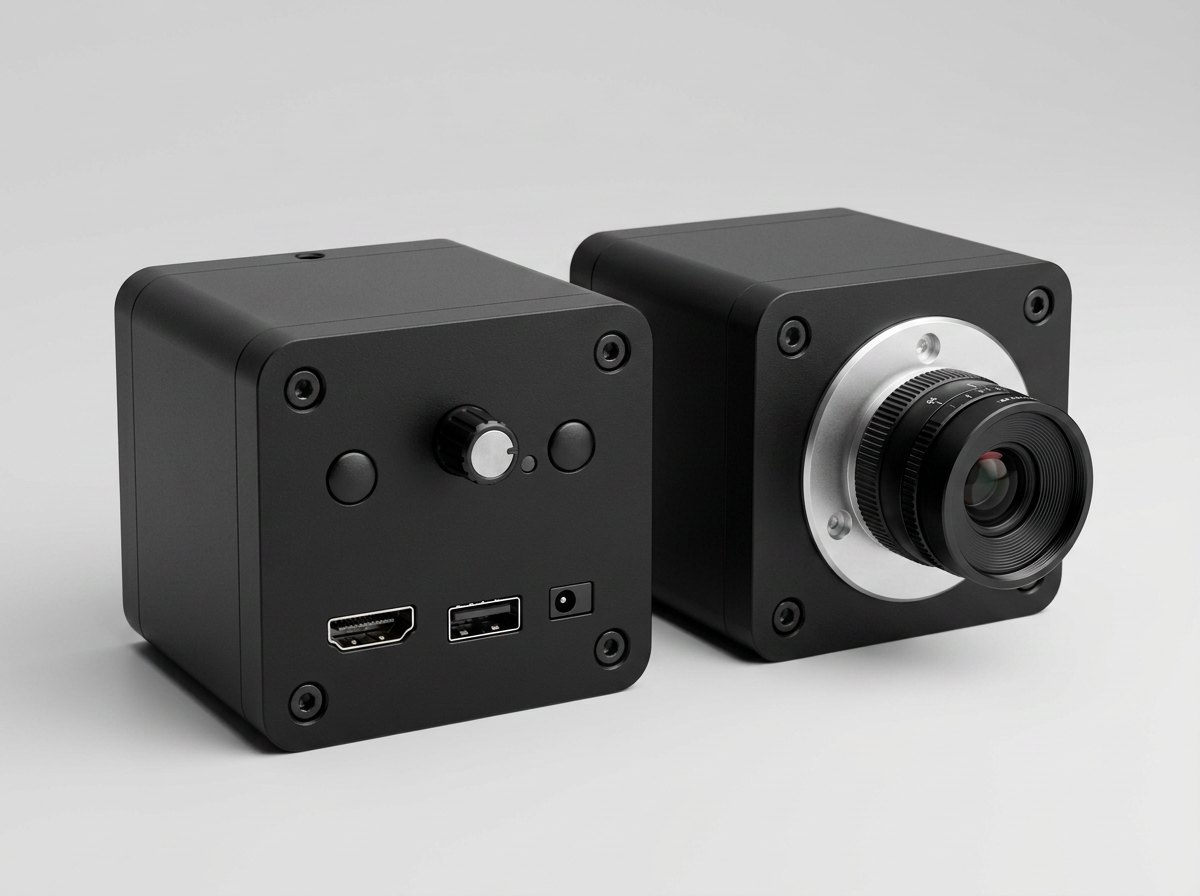
Edge inference runs the detection model on a compute module at the camera instead of a central server: an embedded board with a neural accelerator in the single-digit TOPS range paired with one or more cameras, running a compact detector such as a YOLO-class model trained on site-specific data. It is the right architecture when bandwidth, latency, connectivity or vehicle-mounted power constrain the system; a PC-based station remains the right architecture when throughput, multi-camera synchronization or measurement precision dominate.
Where this capability comes from
Beyond fixed production-line inspection, VisionAxiom develops embedded and edge-vision modules for specialized applications. Selected VSA technology has also been developed for VAX products. That work gives our engineering team practical experience with embedded NPU inference, depth imaging, vehicle-mounted cameras, model validation and field deployment — capabilities that inform the architecture of our industrial inspection systems.
- Embedded NPU boards (single-digit TOPS class) paired with industrial cameras.
- Depth imaging for volume estimation, alongside on-equipment weighing.
- Vehicle-mounted and in-cab cameras for event detection under harder power and environmental constraints.
- Detection models trained on site-specific imagery, versioned with the deployed firmware image.
Model training workflow
- Collect imagery on the actual equipment, in the actual lighting, across shifts — not from a public dataset.
- Label against a written class definition so two annotators produce the same result.
- Train a compact detector sized to the accelerator budget, then quantize and measure the accuracy cost of quantization explicitly.
- Hold out a site-specific validation set and report misses and false alarms separately.
- Version the model with the firmware image so a field unit's behavior is reproducible.
Compute placement
Most real systems use more than one of these. The design question is which decision has to be made where, and what the line or vehicle does if that decision is late.
- Embedded NPU at the camera
- Low bandwidth, vehicle or remote power, latency-critical event detection
- Industrial PC at the station
- Multi-camera sync, high frame rates, measurement, long image retention
- Server / plant
- Aggregation, traceability records, model management and retraining
What carries over to line inspection
Embedded deployment forces habits that production inspection also needs: a fixed imaging setup, a labeled validation set, versioned models tied to firmware, and an explicit fail-safe when a result does not arrive in time. Our line-side architecture work applies the same rules.
Frequently asked questions
- Is embedded or vehicle vision a VisionAxiom product line?
- No. VisionAxiom is an industrial vision inspection company specializing in code and OCR/OCV verification, label inspection, print/web inspection and packaging inspection. Embedded and edge-vision engineering is secondary capability we draw on, and selected VSA technology has also been developed for VAX products.
- Can an edge board replace an industrial PC for line inspection?
- Sometimes, for a single moderate-rate check with a compact model. It usually cannot when you need synchronized multi-camera acquisition, high-resolution measurement, sustained high frame rates, or extended image retention.
- Do you train models on our data?
- Yes, when a learned model is the right tool. Data handling, retention and ownership are written into the project scope before collection starts.
Related engineering material