Engineering
Optics for Inspection
Optics convert the scene into pixels. Everything downstream inherits its errors.
Direct answer
How is a machine vision lens selected?
Approximate focal length from the geometric relation between sensor size, working distance and field of view: focal length ≈ (sensor dimension × working distance) ÷ field of view. Then check that the lens covers the sensor format, resolves at the pixel pitch, provides adequate depth of field at the working aperture, and meets distortion limits if measurements are being made.
The geometric starting point
For a standard entocentric lens, focal length ≈ (sensor dimension × working distance) ÷ field of view. This thin-lens approximation ignores lens thickness, magnification-dependent flange distance and distortion, so treat the result as a starting point for lens-family selection rather than a final specification.
Depth of field and aperture
- Stopping down increases depth of field but costs light and eventually resolution to diffraction.
- Parts with height variation or unstable presentation need explicit depth-of-field budgeting.
- Depth of field is not a substitute for fixturing; a repeatable working distance is cheaper than an f/16 light budget.
When to use telecentric lenses
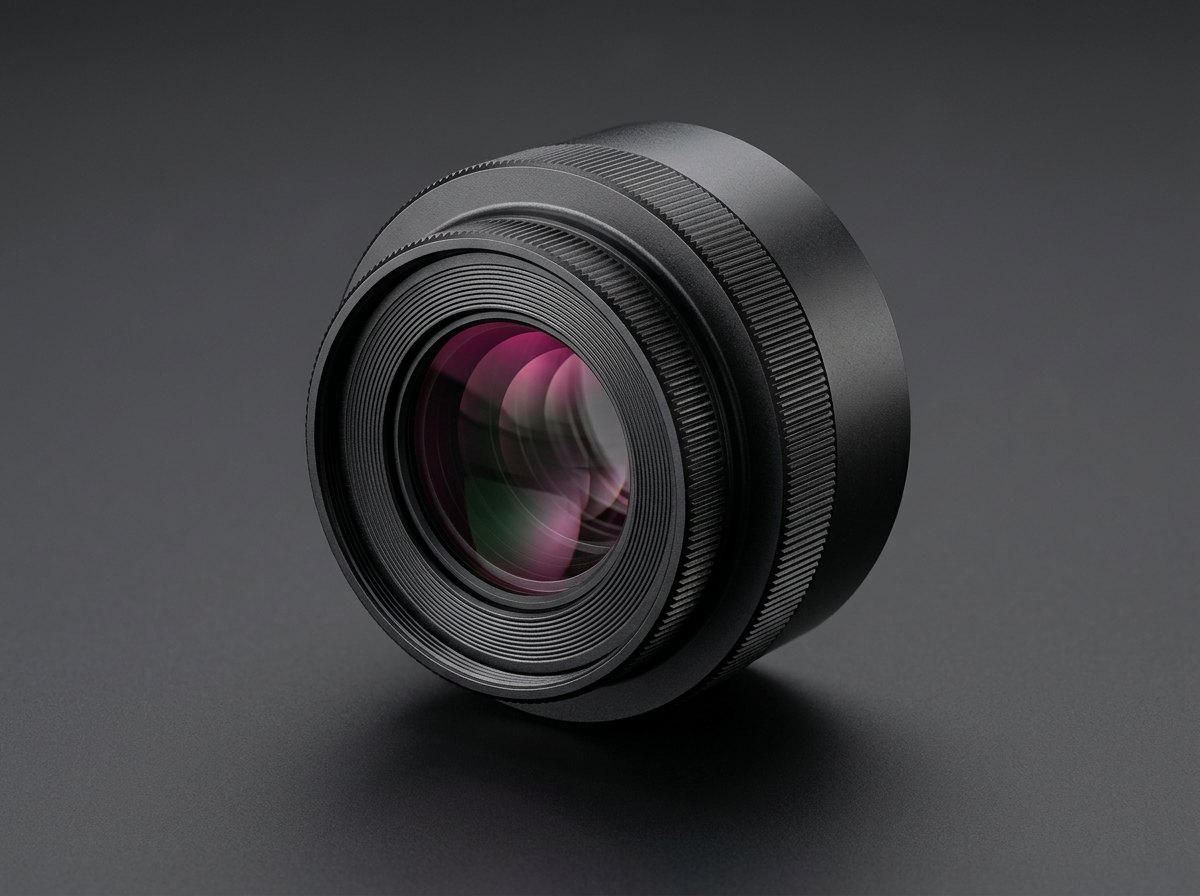
Telecentric lenses eliminate perspective-driven magnification change with distance, which matters for dimensional gauging, features at different heights, and through-hole inspection. They cost more, have a fixed field of view and demand tighter mechanical layout — worth it for measurement, wasteful for presence checks.
Distortion and calibration
If you are reporting a dimension, distortion must be characterized and corrected with a calibration target, and the calibration must be re-verified after any mechanical change. If you are reporting pass/fail on presence, distortion is usually irrelevant. Know which claim you are making.
Related engineering material