Imaging
Area-Scan Imaging
Most discrete-part inspection is an area-scan problem solved by a good trigger and a short exposure.
Direct answer
What is area-scan imaging used for?
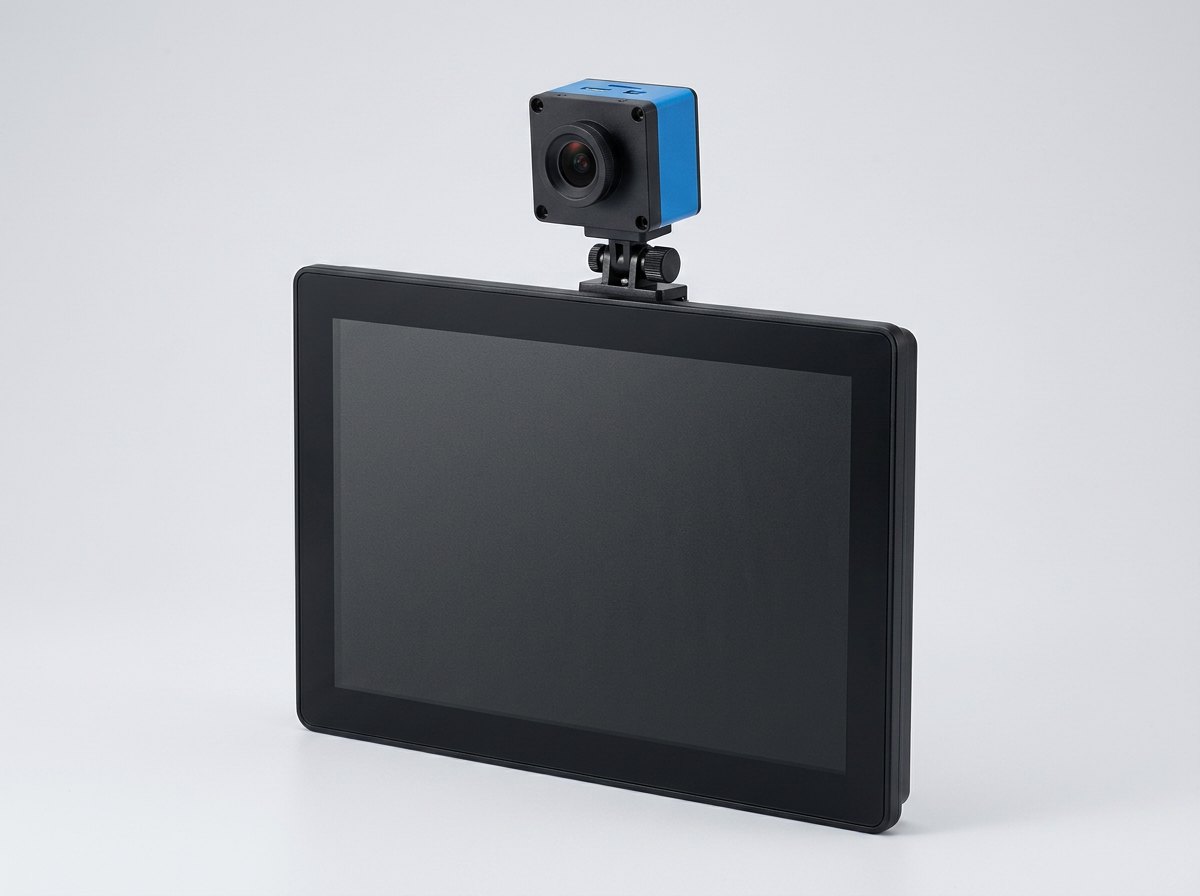
Area-scan cameras capture a full two-dimensional frame per trigger, which suits discrete parts, packages and assemblies presented at a station. Combined with a photo-eye or encoder trigger and strobed illumination, a single frame can support presence, placement, dimensional, character and defect checks simultaneously.
Design levers
- Trigger source: photo-eye for spaced parts, encoder position for indexed motion, PLC for synchronized cells.
- Exposure: short enough that travel during exposure is a small fraction of the smallest feature.
- Strobe: overdriven pulsed illumination buys light without heat and freezes motion.
- Multi-camera: several area-scan views can cover multiple faces or extend FOV without losing resolution.
Motion blur, quantified
Blur in millimeters is simply line speed multiplied by exposure time. At 1 m/s, a 100 µs exposure smears 0.1 mm. If the smallest feature you must resolve is 0.2 mm, that blur is already consuming half of it — so exposure, not resolution, is your limiting design variable.
When to escalate to line scan
If required coverage times required resolution exceeds what a reasonable number of area-scan cameras can deliver, or the product never stops, move to line scan. That decision is made with a bandwidth and resolution budget, not by preference.
Related engineering material